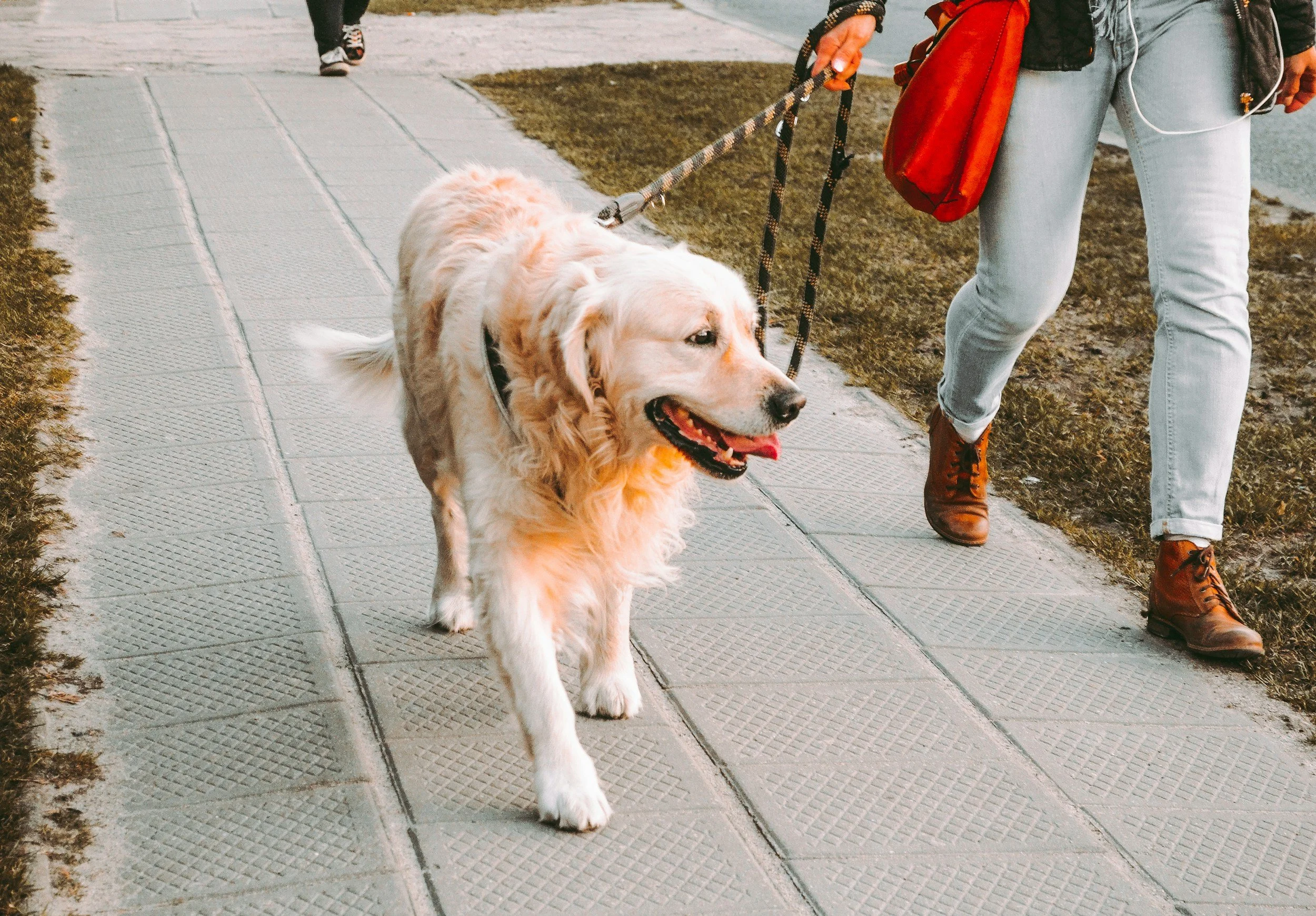
Picture this: It’s a beautiful Saturday morning in South End. You’ve got your coffee in one hand and your dog’s leash in the other, ready for a relaxing stroll down the Rail Trail. But within five minutes, the relaxation vanishes. Your dog is lunging toward a passing Goldendoodle, pulling your arm out of its socket to sniff a discarded taco wrapper, and spinning in circles as a light rail train rumbles past. By the time you get home, you’re frustrated, your dog is overstimulated, and that "relaxing" walk felt more like a workout you didn't sign up for.
If this sounds familiar, you aren’t alone. Walking a dog in the Queen City has become increasingly complex as our urban centers grow denser and more "dog-friendly." At Canine Compass, we believe that a walk should be the best part of your day, not the most stressful. To get there, we have to move beyond basic obedience and look at the unique challenges of dog training in Charlotte, NC.
The Reality of Walking a Dog in the Queen City
Charlotte has transformed. Areas like Uptown, South End, and NoDa are no longer just places we work; they are places we live, eat, and play—often with our dogs in tow. While the "dog-friendly" label is great for our social lives, it creates a high-pressure environment for our canine companions.
The sheer density of Charlotte’s urban core means your dog is constantly bombarded with "micro-stressors": the hiss of bus brakes, the scent of a dozen other dogs on every corner, and the unpredictable movements of scooters and pedestrians. When we talk about dog training in Charlotte, NC, we aren't just talking about teaching a dog to "heel" in a quiet living room; we are talking about helping them navigate a sensory-rich metropolis with confidence.
Why "Standard" Leash Training Fails in High-Distraction Environments
Most traditional leash training methods were designed for suburban sidewalks or open fields. They rely on the idea that the dog should focus on the handler because there is nothing else to do. In a city like Charlotte, that logic falls apart.
When you are walking past a crowded patio at a brewery in South End, your dog’s brain is processing a massive amount of data. Expecting them to ignore the world entirely is often unrealistic and unfair. "Standard" training often fails because it doesn't account for environmental management. We don't just want a dog that follows a command; we want a dog that has the emotional regulation to see a distraction and choose to check back in with you.
The Psychology of the Pull: What Your Dog is Actually Thinking
To stop the pulling, we have to understand why it’s happening. In our experience, most Charlotte dogs pull for one of three reasons:
Frustrated Greeting: They love other dogs and are desperate to say hello.
Environmental Stress: They are overwhelmed by the city noise and are trying to "get through" the walk as fast as possible.
Lack of Engagement: They simply haven't been taught that the person on the other end of the leash is more interesting than the squirrel in Fourth Ward Park.
Moving away from "dominance" myths is the first step. Your dog isn't trying to be the "alpha" of Uptown; they are likely just reacting to a world that is moving very fast around them. This aligns with modern veterinary behaviorist recommendations.
Strategic Equipment: What Works for Charlotte’s Terrain
Safety is paramount when navigating busy intersections and narrow sidewalks. While there is no "magic" collar that replaces training, the right equipment makes loose leash walking much easier to manage.
We generally recommend high-quality, front-clip harnesses for urban walking. Unlike traditional collars, which can put pressure on the neck when a dog lunges toward a distraction, a front-clip harness gives you better directional control without causing discomfort. In a city where a sudden bolt toward the street can be life-threatening, having equipment that offers security and leverage is a non-negotiable safety protocol. For more guidance on choosing the right approach for your dog, explore our training programs. You can learn more about evidence-based techniques from the American Kennel Club's training resources.
The "Canine Compass" Method for Loose Leash Success
Our approach to dog training in Charlotte, NC focuses on building a "conversation" on the leash. Here is how we start:
The 80/20 Rule: 80% of your walk should be about engagement and 20% can be "sniff time." If your dog never looks at you, you aren't walking together; you're just being dragged.
Reward the Check-In: Every time your dog looks back at you voluntarily—even for a split second—mark that moment and reward it. We want them to realize that checking in with you is the most rewarding thing they can do.
Be More Interesting Than Charlotte: If you are staring at your phone while walking through NoDa, you can't expect your dog to be engaged with you. Use your voice, change your pace, and be an active participant in the walk.
Navigating Patios and Parks: Social Etiquette for Charlotte Dog Owners
One of the best parts of living here is the ability to bring your dog to a local park or a dog-friendly patio. However, this requires a high level of "social savvy."
The biggest mistake we see is allowing "on-leash greetings." When two dogs meet on a tight leash, they can't use their natural body language to communicate, which often leads to tension or a scuffle. In a crowded Charlotte brewery, the goal shouldn't be for your dog to meet every other dog; the goal should be neutrality. A successful "patio dog" is one that can settle under the table and relax while the world goes by.
Conclusion: Reclaiming Your Walk
Walking your dog shouldn't be a chore you dread. By understanding the unique pressures of the Charlotte environment and focusing on engagement rather than just "control," you can turn those stressful outings into the highlight of your day.
Whether you are dealing with a persistent puller or a dog that is overwhelmed by the sights and sounds of the Queen City, we are here to help. Our private, in-home sessions are designed to tackle these real-world challenges exactly where they happen.
Ready to transform your walks? Book a consultation with Canine Compass today and let’s start building a better bond on both ends of the leash.